Leading Distributed Teams: Skills Every Manager Needs in 2026!!!
March 6th, 2026
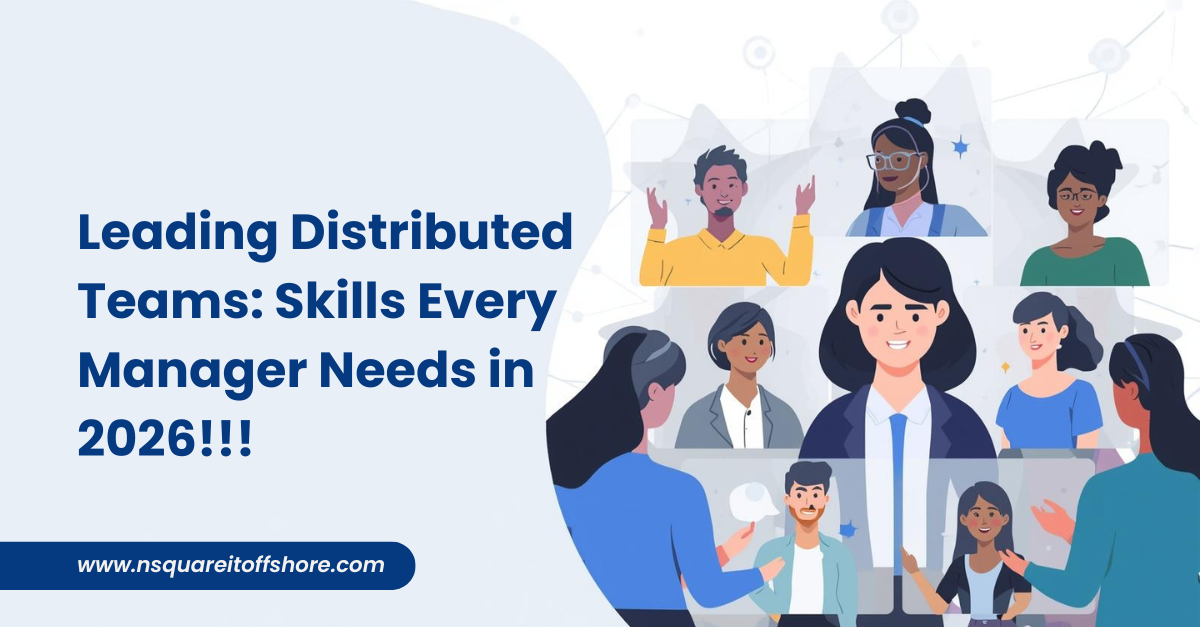
Managing people once meant sharing an office, reading body language, and resolving issues in hallway conversations. In 2026, leadership looks very different.
Teams are spread across countries, time zones, cultures, and employment models. Some employees you may never meet in person. Yet expectations for performance, engagement, and accountability are higher than ever.
The managers who succeed are not those who control work—but those who connect, enable, and trust.
Why Distributed Leadership Is No Longer Optional
Distributed teams are no longer an experiment. They are the default for:
- Global startups scaling fast
- Enterprises building regional hubs
- Remote-first and hybrid organizations
- Companies hiring skills beyond borders
Traditional management habits struggle in this environment. New skills are now essential.
Skill 1: Outcome-Driven Leadership
In distributed teams, presence does not equal productivity.
What This Looks Like in Practice
- Defining clear goals instead of monitoring hours
- Measuring progress through deliverables, not activity
- Trusting employees to manage their own time
Managers who focus on outcomes create clarity without micromanagement.
Skill 2: Asynchronous Communication Mastery
Not everyone is online at the same time—and that’s not a problem.
Strong Distributed Managers:
- Write clearly and with context
- Share decisions in documented formats
- Reduce unnecessary meetings
- Respect response-time differences
Asynchronous communication keeps work moving without burnout.
Skill 3: Cultural Intelligence
Global teams bring diverse ways of thinking, speaking, and working.
Why This Matters
- Feedback styles vary by culture
- Silence doesn’t always mean disengagement
- Agreement may not be openly expressed
Effective managers learn to listen beyond words and adapt their leadership approach.
Skill 4: Emotional Awareness Without Physical Cues
You can’t rely on body language in a distributed world.
Managers Need To:
- Check in intentionally
- Notice changes in tone or responsiveness
- Create safe spaces for honest conversations
- Normalize discussing workload and well-being
Human connection doesn’t disappear remotely—it just requires effort.
Skill 5: Clarity in Expectations and Boundaries
Ambiguity is amplified in distributed teams.
Strong Leaders Provide:
- Clear role definitions
- Documented processes
- Transparent decision ownership
- Healthy boundaries around availability
Clarity reduces confusion, stress, and conflict.
Skill 6: Tech Fluency Without Overdependence
Tools enable distributed work—but they don’t replace leadership.
What Matters Most
- Choosing tools that simplify, not overwhelm
- Ensuring adoption across regions
- Using data to support decisions, not control people
Technology should empower teams, not police them.
Skill 7: Inclusive Performance Management
Not all high performers speak the loudest or work the longest hours.
Fair Managers:
- Recognize contributions across time zones
- Avoid proximity and visibility bias
- Adapt evaluation criteria for distributed realities
Inclusion drives retention and trust.
Skill 8: Coaching Over Commanding
In 2026, employees expect managers to be enablers.
This Means:
- Asking more questions than giving orders
- Supporting skill growth
- Helping team members navigate complexity
- Creating psychological safety
Great managers grow people, not just output.
Skill 9: Handling Distributed Conflict Calmly
Misunderstandings happen more easily without context.
Effective Conflict Management Includes:
- Addressing issues early
- Clarifying intent before reacting
- Avoiding public escalation
- Respecting cultural communication norms
Silence rarely solves distributed conflict—clarity does.
Skill 10: Leading with Trust
Trust is the foundation of distributed work.
Trust Is Built By:
- Consistency in actions
- Transparency in decisions
- Fair treatment across locations
- Following through on commitments
Without trust, no system or tool will work.
What Distributed Teams Need From Managers in 2026
They don’t need constant supervision.
They need:
- Direction without pressure
- Structure without rigidity
- Support without intrusion
- Leadership without ego
Final Thought
Leading distributed teams in 2026 is not about being everywhere at once.
It’s about creating alignment, trust, and purpose—no matter where your team sits.
Managers who evolve their skills won’t just manage distributed teams.
They’ll build resilient, motivated, and future-ready organizations.
FAQs
Is managing distributed teams harder than in-office teams?
It’s different, not harder. It requires intentional communication, clarity, and trust instead of physical presence.
How can managers avoid micromanaging remotely?
By focusing on outcomes, setting clear expectations, and trusting employees to manage their time and methods.
What’s the biggest leadership mistake in distributed teams?
Assuming everyone experiences work the same way. Time zones, cultures, and environments shape performance.
How often should managers check in with distributed employees?
Regularly, but meaningfully. Quality conversations matter more than frequency.
Can new managers succeed in distributed leadership?
Yes, if they are coached early, supported with clear frameworks, and encouraged to lead with empathy.