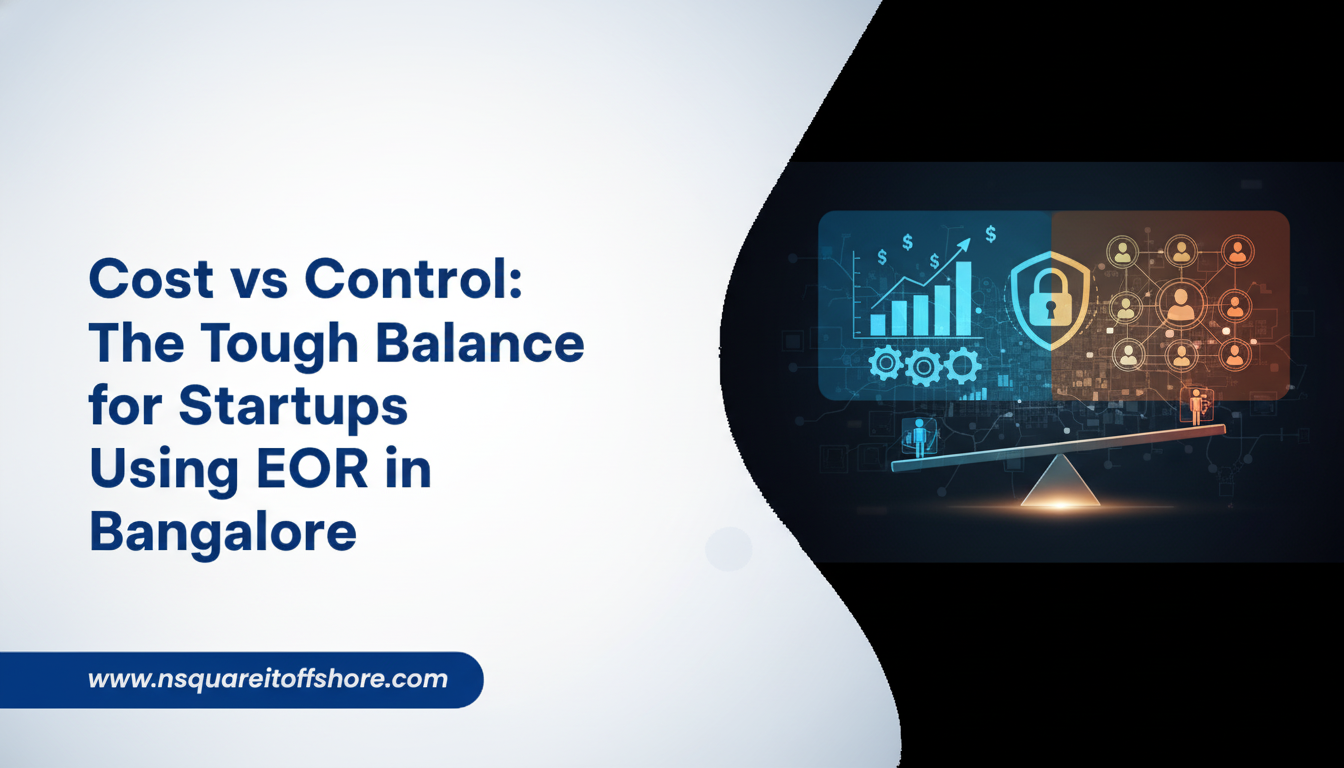
Cost vs Control: The Tough Balance for Startups Using EOR in Bangalore
April 7th, 2026
Bangalore startups love speed. They love scale. They love efficiency.
But when it comes to global hiring through Employer of Record (EOR), they often face a silent dilemma:
Should we optimize for cost, or should we retain control?
EOR promises both.
In reality, every startup must decide where to draw the line.
Because while EOR reduces operational burden, it also introduces a new layer between the company and its people.
And that is where the real balance begins.
Why This Dilemma Exists in the First Place
Startups choose EOR because they want:
- Faster global hiring
- Lower setup costs
- Reduced legal complexity
- Scalable operations
But EOR also means:
- Another entity manages payroll
- Contracts are standardized
- Compliance decisions are external
- Some HR processes are shared
So the question is not:
“Is EOR good or bad?”
The real question is:
“How much control are we willing to trade for speed and savings?”
Understanding the Cost Side of EOR
On the surface, EOR looks cost-efficient.
It saves money on:
- Entity registration
- Legal consultants
- Local HR teams
- Payroll infrastructure
For Bangalore startups, this is especially attractive because:
- Cash flow is critical
- Runway matters
- Expansion needs to be lean
EOR allows startups to:
- Enter new markets with minimal investment
- Hire without long-term fixed costs
- Test roles before committing
From a financial perspective, EOR feels like a smart shortcut.
Understanding the Control Side of EOR
Control is not just about authority.
It is about how deeply you manage the employee experience.
With EOR, startups often give up partial control over:
- Contract customization
- Payroll timelines
- Benefits structure
- Exit processes
This can feel uncomfortable when:
- You want flexibility in compensation
- You need fast process changes
- You want unique policies per role
EOR introduces structure.
Startups are used to freedom.
That tension is real.
Where Startups Feel the Trade-Off Most
- Compensation Flexibility
EOR works with country-specific frameworks.
This limits:
- Creative salary structures
- Equity-like benefits in some countries
- Custom bonus models
Startups used to experimenting with pay may feel constrained.
- Speed vs Customization
EOR is fast because it is standardized.
But standardization means:
- Less room for exceptions
- Fixed onboarding processes
- Predefined compliance rules
You gain speed.
You lose some personalization.
- HR Process Ownership
With EOR:
- Payroll is external
- Compliance decisions are external
- Some employee queries go through the provider
This can make internal HR teams feel:
- Less empowered
- Less connected to daily operations
Especially in people-first cultures.
- Exit and Performance Management
Termination processes must follow:
- Local laws
- EOR guidelines
- Legal timelines
This reduces:
- Managerial flexibility
- Quick exits
- Informal processes
But increases:
- Legal safety
- Fairness
- Compliance strength
Control is reduced, but protection increases.
How Smart Bangalore Startups Manage the Balance
The best startups do not choose cost or control.
They design a hybrid mindset.
They:
- Use EOR for global and experimental roles
- Keep core leadership on direct payroll
- Align EOR processes with internal culture
- Build strong relationships with EOR partners
- Educate managers on EOR limitations early
They treat EOR as:
- A strategic partner
- Not just a vendor
This mindset shift changes everything.
The Hidden Truth: Control Is Not Always Power
Many founders believe:
More control = better management.
In reality:
More control often means:
- More legal risk
- More operational burden
- More compliance stress
EOR reduces control, but also reduces:
- Regulatory exposure
- Legal liability
- Administrative load
Sometimes, less control creates more focus.
And focus is what startups need most.
When EOR Is the Right Choice
EOR works best when:
- You are entering new markets
- You are hiring niche global roles
- You want fast scalability
- You need compliance support
- You want to stay asset-light
In these cases, cost efficiency matters more than full control.
When EOR May Feel Limiting
EOR may feel restrictive when:
- You want deep HR customization
- You manage very large teams in one country
- You need complex incentive structures
- You already have legal entities
In these cases, control may matter more than cost.
The Human Side of Cost vs Control
Behind every cost-saving decision is a human outcome.
Less control may mean:
- Slower responses to employee requests
- More standardized benefits
- Less flexibility in policies
But it also means:
- Better legal protection for employees
- Fairer employment practices
- More consistent compliance
EOR forces startups to professionalize their people systems earlier than they normally would.
And that is not always a bad thing.
Final Thought
The cost vs control debate is not about choosing one.
It is about choosing:
- What you want to optimize today
- And what you are willing to trade temporarily
For most Bangalore startups, the real win is this:
Use EOR to move fast.
Build internal systems as you scale.
Shift control back when maturity demands it.
EOR is not a permanent compromise.
It is a strategic phase in your growth journey.
The smartest startups are not the ones with maximum control.
They are the ones who know when to let go, and when to take back ownership.
FAQs
Is EOR cheaper than setting up an entity?
Yes. In most cases, EOR is significantly more cost-effective, especially in early stages.
Do startups lose full control with EOR?
No. They retain control over work and performance, but share control over legal and HR processes.
Can companies customize contracts under EOR?
To a degree. Customization is possible within local legal limits.
Is EOR suitable for long-term hiring?
Yes. Many companies use EOR for permanent global teams.
When should a startup move away from EOR?
When it has large teams in one country and needs deep local customization.
Does EOR affect company culture?
Not negatively if startups integrate EOR employees fully into teams.
Who owns performance management in EOR?
The client company manages performance. The EOR handles legal employment.
Is EOR risky from a legal perspective?
No. It reduces legal risk when managed by compliant providers.
Can startups use both EOR and direct payroll?
Yes. Many use hybrid workforce models.
What is the biggest advantage of EOR despite reduced control?
Speed, compliance, and the ability to scale globally without heavy investment.