Lucknow’s Government-Tech Link: How EOR Models Ease Public-Private Workforce Management
October 17th, 2025
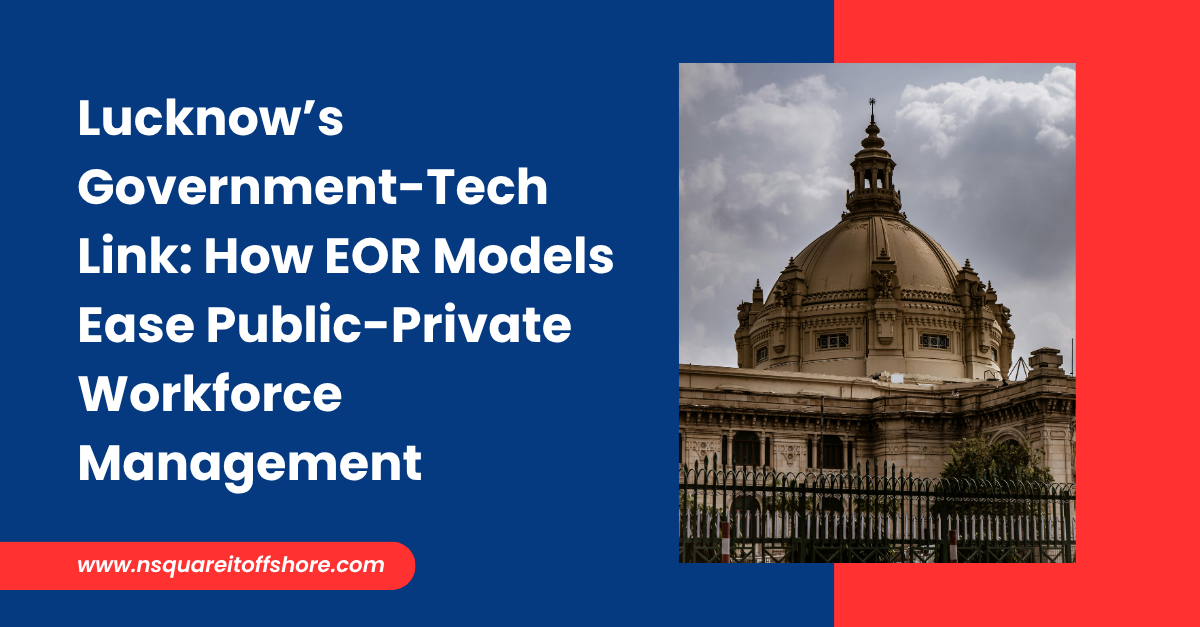
Lucknow — known for its grace, heritage, and evolving skyline — is quietly scripting a new story. Once seen purely as an administrative capital, the city today stands at the intersection of governance and technology, where public initiatives meet private innovation.
Behind this transformation lies a quiet enabler — the Employer of Record (EOR) model — bridging the complexities of workforce management between government bodies, tech startups, and private contractors.
From Bureaus to Bytes: Lucknow’s Shift to a Hybrid Workforce Model
In the past decade, Uttar Pradesh’s capital has become more than a government hub. The city’s growth in IT parks, digital services, and smart city projects has redefined how public departments and private enterprises collaborate.
Government bodies now partner with tech firms, consultants, and digital agencies to deliver services faster and more efficiently.
But managing this mix of permanent staff, contractual workers, and outsourced professionals brings one big challenge — workforce compliance and coordination.
That’s where EOR models have emerged as the unsung heroes, making public-private collaboration smoother, compliant, and scalable.
What Makes Lucknow’s EOR Adoption Unique
Unlike private-sector EOR use cases in metro cities, Lucknow’s demand is driven by a need for hybrid workforce governance — balancing bureaucracy with business agility.
Here’s what stands out:
📄 Contractual Clarity:
EORs create clear, compliant contracts between public departments and private professionals — minimizing disputes and ensuring transparency.
⚙️ Compliance Without Bureaucracy:
Labor laws, PF, ESI, and tax deductions differ across project types. EORs simplify this maze, allowing organizations to stay compliant while focusing on delivery.
💼 Faster Onboarding for Government Projects:
With EORs managing documentation, verification, and payroll setup, skilled professionals can join government-tech projects without red tape.
🤝 Bridge Between Sectors:
Whether it’s a state-run digital mission or a tech consultancy executing smart city modules, EORs unify teams under one legal, compliant framework.
🧾 Payroll Transparency:
Automated salary disbursements, invoice tracking, and digital compliance records ensure both government entities and private partners maintain accountability.
The Human Side of Lucknow’s EOR Transformation
Behind this operational efficiency lies a deeply human story.
Consider the young data analyst hired for a government tech project — previously bogged down by unclear payment cycles and temporary contracts.
Now, with an EOR in place, they receive consistent pay, proper benefits, and documented employment proof.
Or the startup founder who collaborates with a municipal department — no longer overwhelmed by compliance paperwork.
EORs give these innovators the bandwidth to focus on impact, not just administration.
In short, EORs make governance human again — fair, efficient, and transparent.
Why Lucknow Is an Ideal Ground for EOR Growth
Lucknow’s evolving ecosystem provides the perfect foundation for EOR expansion:
- A rising public-private digital partnership through initiatives like Smart City, e-Governance, and tech modernization.
- The presence of regional talent pools skilled in IT, management, and consulting.
- Growing collaboration between state departments and tech incubators.
- Increasing demand for temporary specialists in policy, analytics, and service delivery.
EORs seamlessly fit into this dynamic — offering flexibility with structure and innovation with compliance.
EOR in Action: Real Impact Across Sectors
Here’s how EORs are making visible differences across Lucknow’s governance landscape:
- Smart City Projects: Employing data engineers, architects, and consultants without direct government hiring complexities.
- IT & Digital Missions: Managing tech professionals for digital record-keeping, citizen portals, and automation tools.
- Healthcare & Education Initiatives: Contracting specialists and trainers while maintaining full compliance.
- Public Infrastructure Programs: Managing on-site and remote teams efficiently under one compliant payroll structure.
Each sector reflects how EORs are redefining accountability and agility in public-private work models.
Beyond Administration: A Cultural Shift
What makes this change more profound is its cultural ripple.
Lucknow’s professional ethos — once rooted in conventional government processes — is now embracing digital-first, flexible employment models.
EORs are at the heart of this change, helping government projects retain agility while maintaining transparency and legal integrity.
They enable a partnership mindset, where collaboration replaces hierarchy, and performance replaces paperwork.
The Road Ahead: Policy Meets Platform
As India continues to digitize governance and foster innovation through public-private partnerships, cities like Lucknow are setting the tone for others.
EORs will soon become the default compliance and HR mechanism behind such collaborations — not just as service providers, but as strategic enablers.
Their role will expand beyond payroll to include:
- Workforce analytics for smarter governance decisions.
- Cross-departmental coordination in hybrid employment models.
- Data security and accountability in project-driven contracts.
In essence, EORs will help governments run like agile enterprises — without losing their public responsibility.
Final Thought
Lucknow’s transformation from an administrative hub to a tech-driven governance ecosystem is more than symbolic — it’s systemic.
And in this new ecosystem, EORs are the invisible framework ensuring that innovation, collaboration, and compliance coexist seamlessly.
They don’t just manage workers — they manage trust, transparency, and transformation — three things every modern city needs to grow.