When to Use EOR vs PEO vs Entity Expansion???
March 6th, 2026
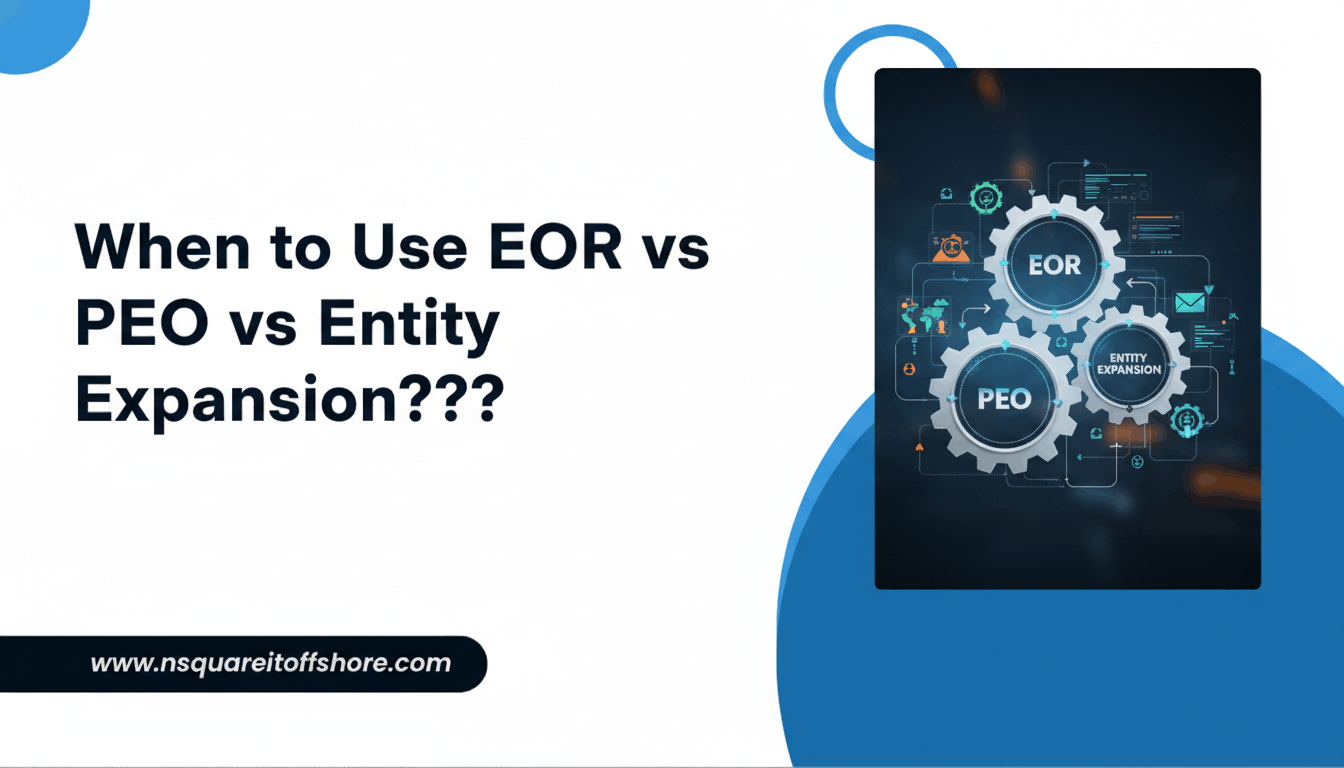
Global growth no longer follows a straight line. Some companies test new markets with one hire. Others scale teams across multiple countries in a year. The challenge isn’t ambition—it’s choosing the right hiring model at the right stage.
This is where the decision between EOR, PEO, and entity expansion becomes critical. Each model solves a different problem, and choosing the wrong one can slow growth, increase risk, or inflate costs.
Let’s break it down in human terms.
The Real Question Companies Should Ask First
Before comparing models, ask yourself:
- How fast do we need to hire?
- Do we want legal responsibility in that country?
- Is this market temporary, experimental, or long-term?
- How much compliance risk can we absorb?
Your answers point directly to the right path.
When EOR Is the Right Choice
Employer of Record works best when speed and compliance matter more than ownership.
Use EOR when:
- You want to hire in a country without setting up a legal entity
- Speed to market is critical
- You’re testing a new region or customer base
- You need full-time employees, not contractors
- Compliance risk needs to sit outside your company
What EOR solves:
- Local employment, payroll, and tax compliance
- Employment contracts aligned with local law
- Statutory benefits and labor protections
- Ongoing regulatory updates
What to remember:
EOR is ideal for flexibility and low risk, but you don’t legally employ the worker directly.
When PEO Makes Sense
Professional Employer Organization is designed for companies that already have a local presence.
Use PEO when:
- You operate through an established entity in the country
- You want help with HR, payroll, and benefits
- You prefer shared responsibility rather than full outsourcing
- Your internal HR team needs operational support
What PEO supports:
- Payroll processing and benefits administration
- HR compliance guidance
- Employee onboarding and policies
- Day-to-day HR operations
What to remember:
With a PEO, legal responsibility is shared. You still carry employer liability.
When Entity Expansion Is the Right Move
Entity expansion is about commitment and long-term investment.
Use entity expansion when:
- The market is strategic and permanent
- You plan to hire large teams locally
- Brand presence and control are priorities
- You’re ready for higher operational complexity
What entity setup enables:
- Full legal and operational control
- Direct employment relationships
- Local branding and market credibility
- Custom HR policies and structures
What to remember:
Entity expansion takes time, capital, and internal resources.
Comparing the Three Models Simply
Speed to hire:
- EOR: Fastest
- PEO: Moderate
- Entity: Slowest
Legal responsibility:
- EOR: EOR holds employer liability
- PEO: Shared responsibility
- Entity: Company holds full responsibility
Cost structure:
- EOR: Predictable per-employee pricing
- PEO: Lower per-employee cost, higher liability
- Entity: High setup and ongoing operational cost
Flexibility:
- EOR: High
- PEO: Medium
- Entity: Low
A Smarter Growth Strategy Many Companies Use
Growth doesn’t have to be one-directional.
Many companies:
- Start with EOR to test markets
- Transition to PEO after entity setup
- Move to full entity expansion once scale is proven
This phased approach reduces risk while preserving long-term control.
Final Thought
There is no universally “right” model—only the right choice for your stage of growth.
EOR gives speed.
PEO offers support.
Entity expansion delivers control.
The smartest companies know when to use each—and when to move forward.
FAQs
Can companies move from an EOR model to direct entity employment?
Yes. Many companies use EOR as a bridge before setting up a legal entity and transitioning employees.
Is EOR more expensive than entity expansion?
EOR appears more expensive per employee, but entity expansion often costs more overall due to setup, legal, and compliance expenses.
Does PEO work internationally?
PEO typically works within countries where the company already has a registered entity.
Which model is best for startups?
EOR is usually the best fit for startups due to speed, flexibility, and low compliance risk.
Can EOR and PEO be used together?
Yes. Companies often use EOR in new markets and PEO in countries where they already have entities.
How do companies decide when to move away from EOR?
When headcount grows significantly and long-term presence is confirmed, entity expansion becomes more viable.